

It's 1 a.m., I should be asleep, and instead I'm doing mental math about that textbook I still haven't paid off, whether my part-time paycheck will actually stretch till the 30th. My stomach's in a knot. My jaw is tight. And somehow I already have a headache building behind my eyes.
I kept telling myself it's "just stress." But it's not just anything, is it? It's my body reacting to money the exact same way it would react to an actual threat.
I should say one thing upfront - I'm not a doctor or a financial expert. I'm just a college student who got tired of feeling like this and went looking for why it actually happens. Turns out it's a lot more common, and a lot more physical, than I thought. Figured I'd write down what I found, because I know I'm not the only one going through it.
Turns out I'm nowhere near alone in this
I went digging, and honestly, the numbers made me feel weirdly better. One widely cited study found that 71% of college students report feeling stressed specifically about their personal finances - not grades, not relationships, money. Zoom out and it's not much different for adults either: 88% of Americans reported financial stress. For people carrying student loans, over 4 in 10 say the debt itself causes regular stress or anxiety, and it's messing with sleep for more than a quarter of borrowers. The average federal loan balance right now is around $39,500 - so if you're lying awake doing the math like I am, that math is genuinely heavy.
Knowing this didn't fix my bank account, obviously. But it did make my 1 a.m. spiral feel less like a personal failing and more like something a lot of us are quietly going through at the same time.


When your Parents are the ones paying & that's exactly the problem
This is the part I relate to the most, so let me actually get into it.
I don't personally owe anything in my own name, my parents are the ones paying. And somehow that comes with its own entire flavor of stress. I know exactly what they're giving up to fund this degree, and I think about it more than I probably should.
While reading around, I found out there's an actual term for this: family achievement guilt. Studies on first-gen and middle-class students found that when your opportunities start to outpace what your parents had access to, a lot of students feel genuinely guilty about it - and that guilt has been linked to more depressive symptoms and lower self-esteem, not just an occasional bad mood.
For me, and I'm guessing for a lot of people reading this, it shows up like: my parents are stretching themselves thin for this, so the second I graduate, I need to start earning and start giving back. It's less "I'm broke" and more "I owe it to them to not waste this." I'm not stressed about my own wallet - I'm stressed about their retirement fund, the vacations they skipped, the loan they took out in their name instead of mine.
And apparently, that pressure runs through the body the exact same way debt-stress does. Wanting to fast-track my own income, feeling like I need to "start contributing" the second I'm done - sometimes before - keeps the same stress response running quietly in the background. It's just guilt doing the driving instead of a monthly bill.
If this is you too, here's the only conclusion I've come to so far: wanting to support your family isn't the problem - that's a good instinct to have. What's not great is when it turns into feeling like you have to rush your own growth just to "earn your keep" as fast as possible. I've started actually saying this out loud to my parents instead of sitting with it alone, and honestly, they'd rather hear it than watch me quietly burn out trying to fix it by myself.

Okay but why does my body actually hurt over a spreadsheet problem?
This is the part that got me. Apparently my brain doesn't really tell the difference between "there's a bear chasing me" and "I don't know how I'm paying for this semester." Both trigger the same alarm system, and both dump cortisol - the main stress hormone - into the bloodstream.
A little cortisol for a little while is apparently fine. It's when it never really switches off that things start breaking down. Chronic financial stress keeps that hormone elevated for weeks or months, and that's when it starts quietly wrecking stuff:
- Sleep - racing "how am I affording this" thoughts are one of the most common reasons people with debt report lying awake
- Gut - stomach aches and that generally unsettled feeling are classic stress-hormone side effects
- Immune system - long-term elevated cortisol actually suppresses immunity, which might explain why I catch every cold going around during a broke month
- Head - tense muscles and disrupted cortisol rhythms are a documented headache and migraine trigger
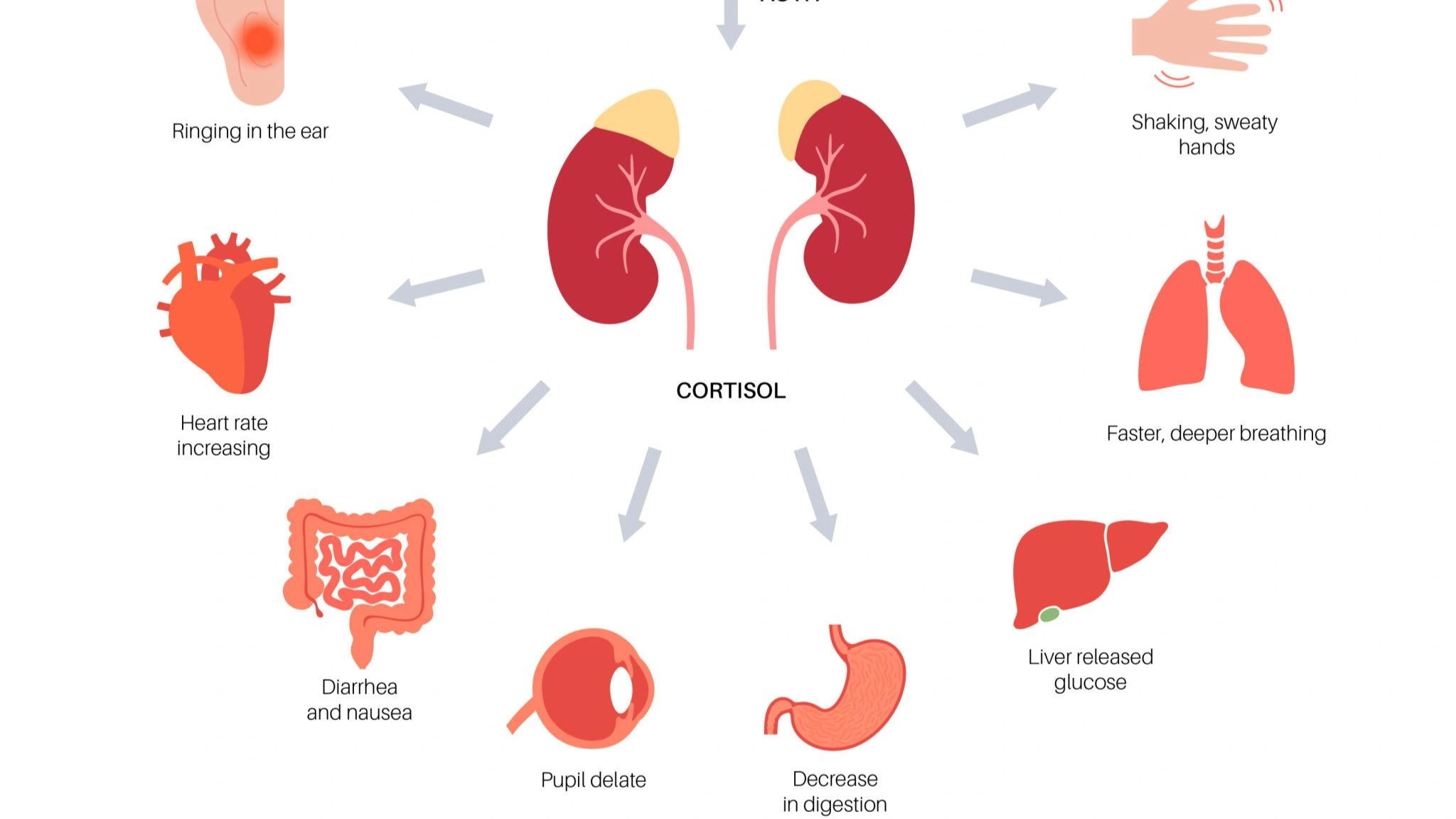

So no, it's not "just in my head." It starts there. It just doesn't stay there.
The Loop nobody warned me about 😔
Here's the part that feels almost unfair: this stress doesn't just sit in the body, it circles back and hits the exact thing I'm stressed about in the first place. Bad sleep and an anxious, foggy brain make it harder to focus in class or show up properly at a part-time job. Worse performance threatens grades or income. That threatens the money situation. Which brings the stress right back around, usually worse than before.
I also came across a study saying people carrying debt had a 90% higher risk of a psychiatric disorder compared to people without it. That number stopped me for a second. This isn't about being bad with money. It's a real physiological loop, and honestly, just seeing it as a loop instead of a personal failing made it a little easier to deal with.


What I'm actually trying (not a 12-step plan) 😇
I don't have this solved, not even close. But here's what's genuinely been helping:
1. Saying it out loud to one person. Isolation makes this heavier. I felt less alone the second I realized how many people around me are quietly doing the same math.

2. Protecting my sleep like it's non-negotiable. It's the first domino, and honestly the easiest one to fix.

3. Actually using campus resources instead of waiting till I'm drowning. Financial aid offices and counseling centers exist specifically for this overlap.

4. Noticing the physical symptoms for what they are. A stress headache is information, not weakness.

5. Starting small with saving and investing, even if it's barely anything. Turns out even a tiny amount, put aside consistently, does something for the anxiety itself.

6. Taking the part-time work seriously as growth, not just a paycheck. I've noticed it's these jobs teach me things my classes couldn't.

If money stress is genuinely messing with your sleep, appetite, or ability to function day to day, it's worth talking to someone about it - a doctor, a counselor, anyone. My body was telling me this wasn't "just stress" long before I was ready to listen to it. Maybe don't wait as long as I did.
Do let me know in the comment box folks if anyone else has other methods to get the hell out of this loop! ✌️🫰
Can financial stress actually cause physical symptoms?
Yes. Chronic financial stress keeps cortisol elevated for extended periods, and that's been linked to headaches, sleep problems, digestive issues, and a weaker immune response. It's not "just in your head" - it's a real physiological response, not a character flaw.
Is "cortisol face" a real medical condition?
Not exactly. It's a term that blew up on TikTok to describe facial puffiness people attribute to stress, but experts say everyday stress rarely causes visible facial changes on its own - that's more associated with conditions like Cushing's syndrome.
How does financial stress affect sleep for college students?
Racing thoughts about money; rent, loans, whether a paycheck will stretch - are one of the most common reasons people report lying awake. In a 2026 survey, over a quarter of student borrowers said thinking about their debt disrupted their sleep.