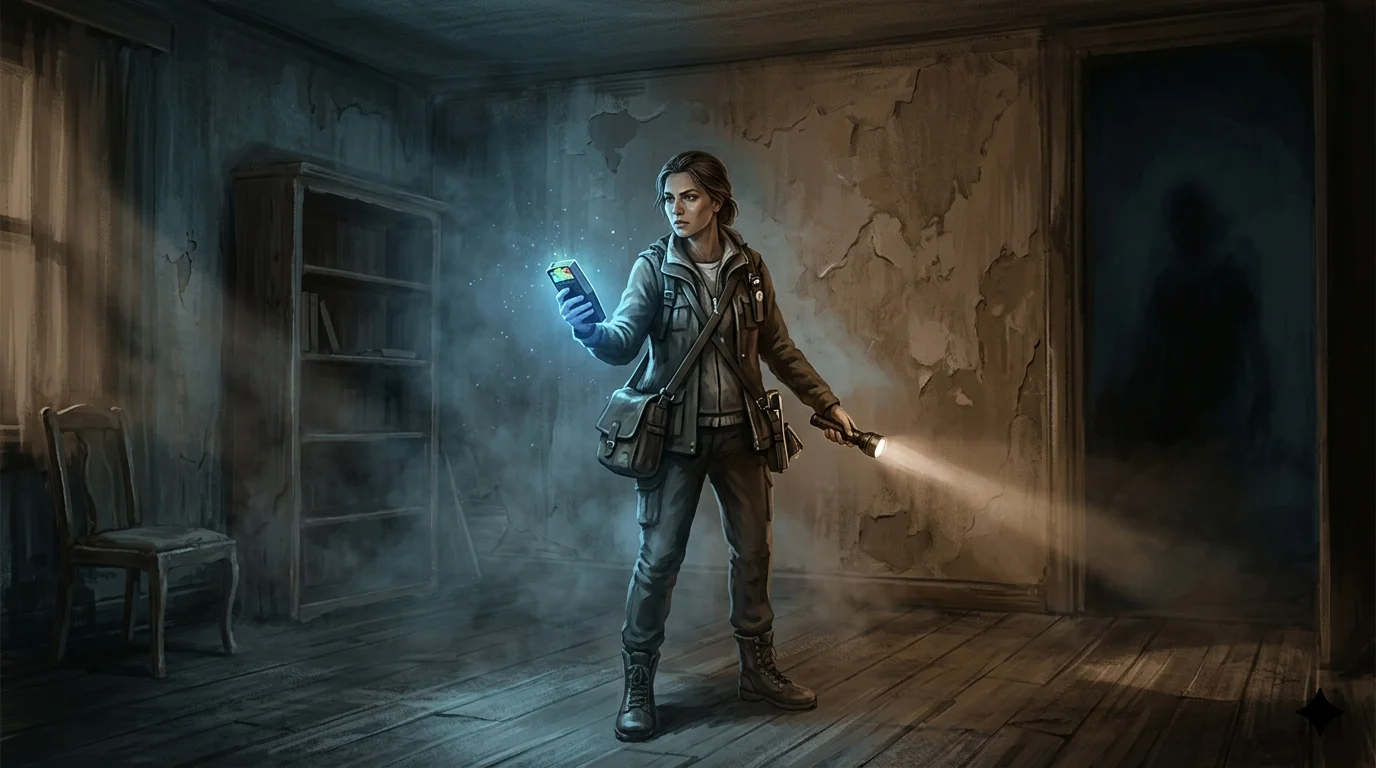

"There are more things in heaven and earth, Horatio, than are dreamt of in your philosophy."
- William Shakespeare, Hamlet
Are ghosts real? Or are we just sticking to some old superstitions because it's more fascinating than accepting there's nothing there?
Go out and Ask ten people and you'll get ten opinions. Most will laugh it off. Ghosts, to them, are campfire stories, hand-me-down folklore for a world that should've grown out of it by now.
Except there's a whole other crowd that just won't leave it at that. I find them kind of fascinating, honestly. They're not mystics, they're not selling anything, and a surprising number of them show up to supposedly haunted houses lugging gear you'd expect in a physics lab, not a séance. The logic is almost stubbornly simple: if ghosts are actually out there, science should be able to catch one.
Ghost Hunting Grew Up
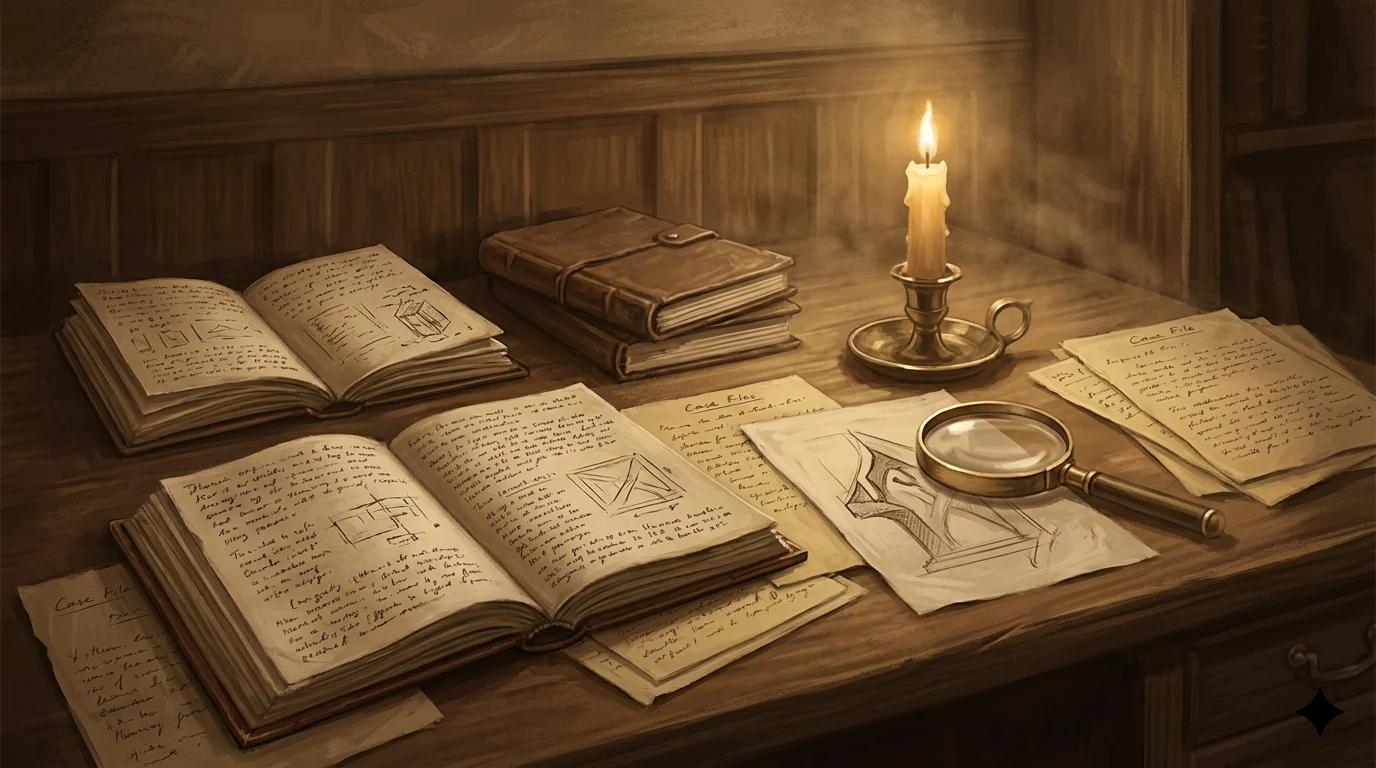
The Society for Psychical Research has been doing this since 1882. That's not a typo , it's one of the oldest organizations of its kind anywhere in the world. Their whole approach was refreshingly boring, in a good way: treat a haunting report the same way you'd treat any other claim. Collect what you can. Cross off the obvious explanations. See what, if anything, is left over.
That mindset never really went away. It's basically what those late-night ghost-hunting shows are doing too, even if the production value makes it look silly sometimes. Say what you want about the genre. they don't walk into a creaky old house and call it haunted because a floorboard groaned. They bring instruments. They log numbers. Clumsy as it sounds, they're trying to turn a gut feeling into something you can measure.
What's Actually In the Kit
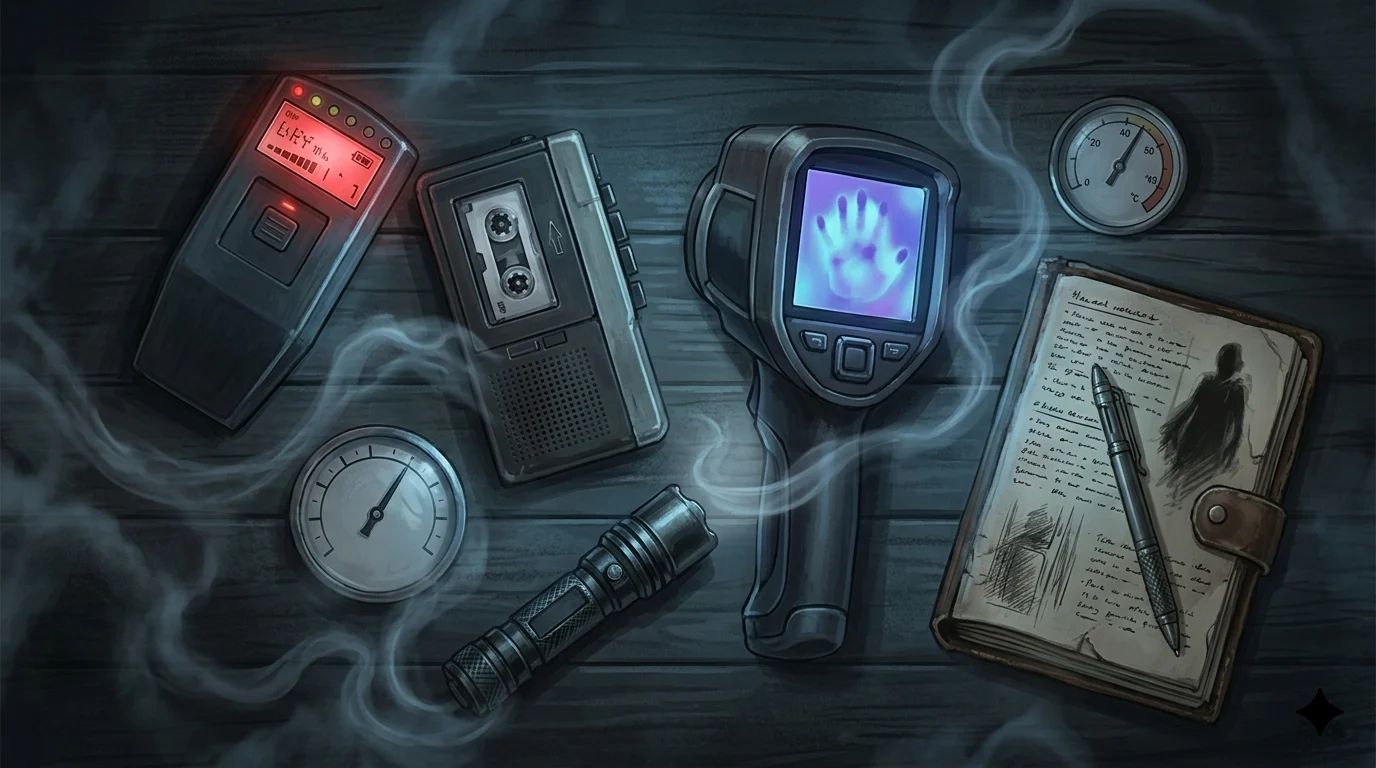
And honestly? The equipment is more interesting than I expected going in.
EMF meters are the poster child of the whole hobby. They measure electromagnetic fields, and the theory is simple: an unexplained spike, with nothing plugged in nearby and no obvious wiring, might mean something's in the room that you can't see. Skeptics have a decent counterpoint here. They say old, faulty wiring throws off nearly identical readings. Most investigators know this already. They don't treat a weird spike as proof. They treat it as a thread worth pulling.
Then there's battery drain, which comes up constantly in these reports. Fresh batteries dying within minutes, in a spot with no obvious cause. There's a folk theory floating around that something is drawing energy from its surroundings to manifest. No real science backs that claim up, not even close, but the pattern shows up often enough that a lot of investigators log it instead of chalking it up to bad luck.
Beyond those two, you've got cold-spot readings, hours of tape running in empty rooms hoping to catch an EVP (a voice nobody in the room actually spoke), and infrared cameras hunting for movement the naked eye would miss entirely. None of it proves anything by itself. But all of it is an attempt at the same thing: turning "I felt something in here" into something you could actually point to.
The Enfield Case
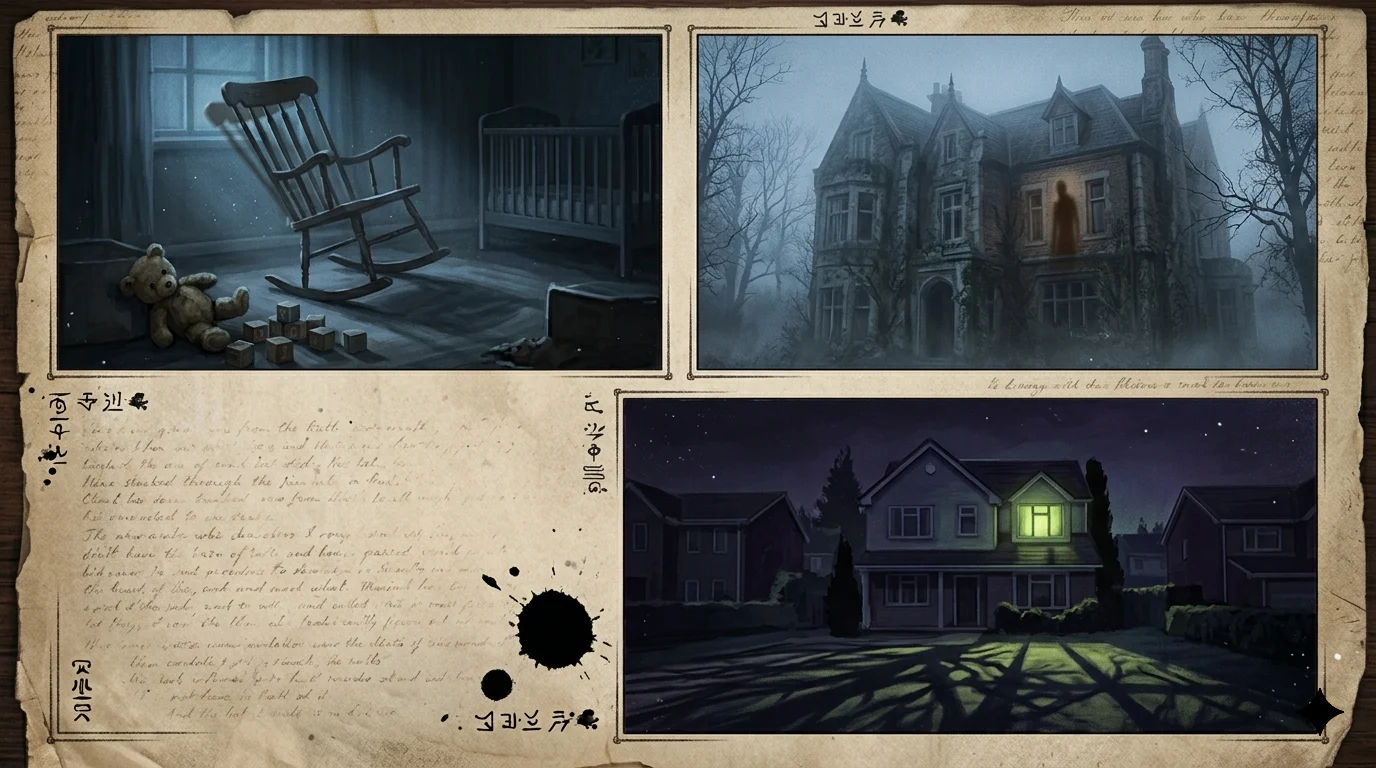
Late 1970s. North London. A family reports furniture sliding on its own, knocking with no source, and the detail that made it famous a young girl seemingly speaking in a voice that wasn't hers. Investigators and journalists spent years picking the case apart afterward, and yes, some of it turned out to be the kids messing around. That's the outcome in most of these stories, if we're being honest. But a few of the investigators who spent real time in that house, including some who walked in expecting to debunk the whole thing, left admitting a handful of moments never got a clean explanation.
Borley Rectory
For decades this place was billed as the most haunted house in England. Footsteps with nobody behind them. A headless coachman. Writing that appeared on the walls overnight. Objects sliding across rooms with no one nearby. Harry Price documented it obsessively, and a lot of his methods have since been picked apart as sloppy, or outright staged for effect. The building burned down in 1939. Most historians today treat the bulk of the legend as exaggeration stacked on exaggeration. But a few witnesses with nothing to gain from lying never had their accounts fully explained away either.
The Amityville Case
A family moved into a house in Amityville, New York, in 1975 and lasted less than a month. Slamming doors, a foul smell that came and went, a heaviness in the air they couldn't quite shake. It became one of the most famous hauntings in American history, and just as famously, a good chunk of it later turned out to be invented for a book deal. Most skeptics call it the textbook hoax, and it's hard to argue otherwise. Even so, a few of the smaller reported details never quite line up with the "we made it all up" version either which is probably why people are still arguing about it fifty years on instead of just closing the book.
You start to see the pattern after a while. Exaggeration, a prank, someone getting a little too into their flashlight. And every single time, there's a small leftover piece that nobody's fully managed to explain away.
So... Are They Real?
Maybe the better question isn't "are ghosts real." Maybe it's "why do we keep trying so hard to find out."
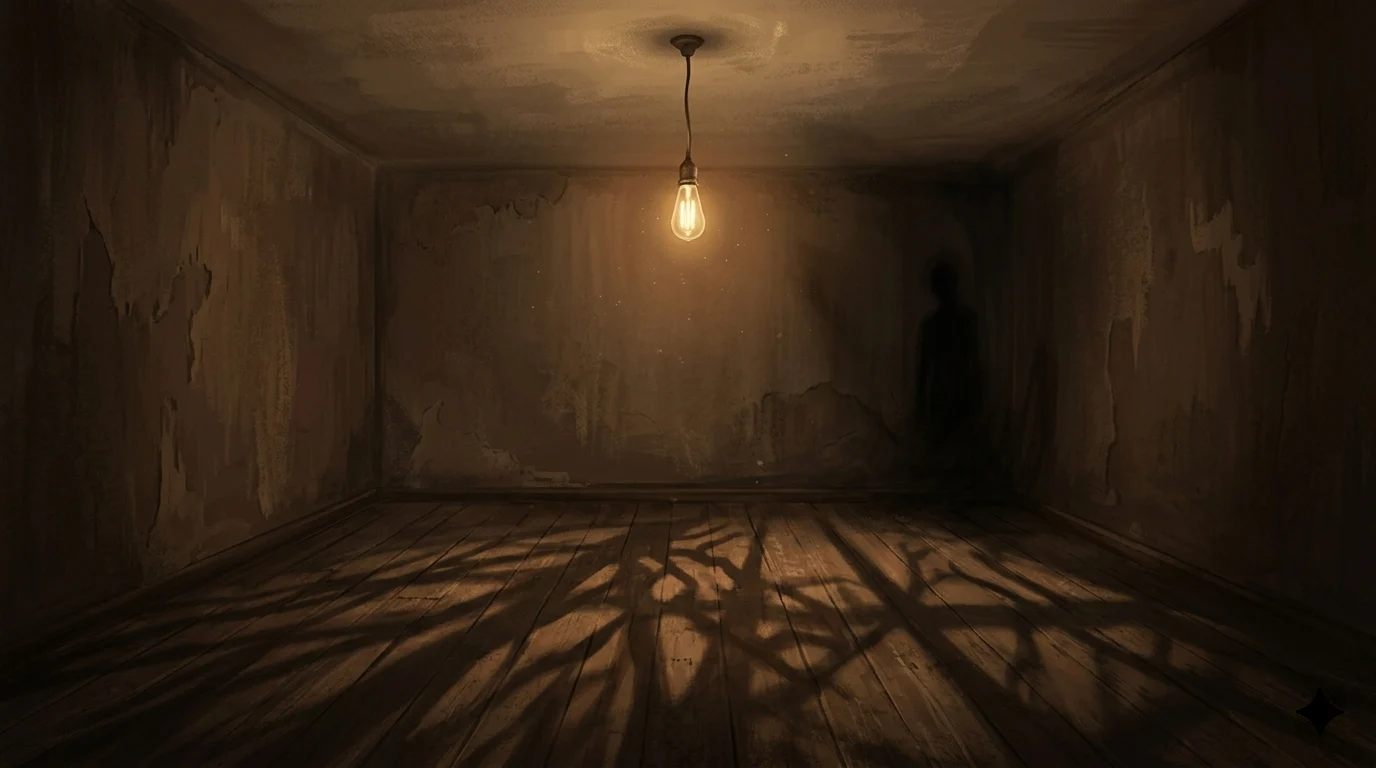
Most reported hauntings fall apart the second anyone looks closely bad plumbing, a draft, a story that got a little taller with every retelling. Investigators know this better than most people, which is exactly why they bother bringing instruments instead of just trusting a gut feeling. And yet, every so often, something stays stuck. No wiring problem. No hoax. No neat explanation. Just a reading, a moment, a feeling that nobody's ever managed to fully account for.
Maybe that's the actual haunting. Not the ghosts themselves. Just the handful of loose threads none of us can quite tie off.
What is the Society for Psychical Research?
Established in 1882, the Society for Psychical Research is one of the oldest organizations of its kind in the world. Their approach is to investigate reports of hauntings systematically by collecting data, ruling out obvious explanations, and analyzing whatever remains.
Do EMF meters prove that a room is haunted?
No, EMF meters do not prove a room is haunted. They measure electromagnetic fields, and while some believe a spike indicates an unseen entity, skeptics point out that old or faulty wiring can cause the exact same readings. Experienced investigators treat these spikes as clues to investigate further rather than as definitive proof.
Is there scientific proof that ghosts drain device batteries?
No, there is no scientific evidence to support the idea that ghosts drain batteries. There is a popular folk theory that entities draw energy from their surroundings to manifest, but while investigators frequently document sudden battery drainage as a recurring pattern, it remains scientifically unproven.
Was the Amityville Horror case a complete hoax?
A large portion of the Amityville case was indeed invented for a book deal, and most skeptics regard it as a textbook hoax. However, the case remains a subject of debate because a few of the smaller reported details do not completely align with the explanation that everything was made up.